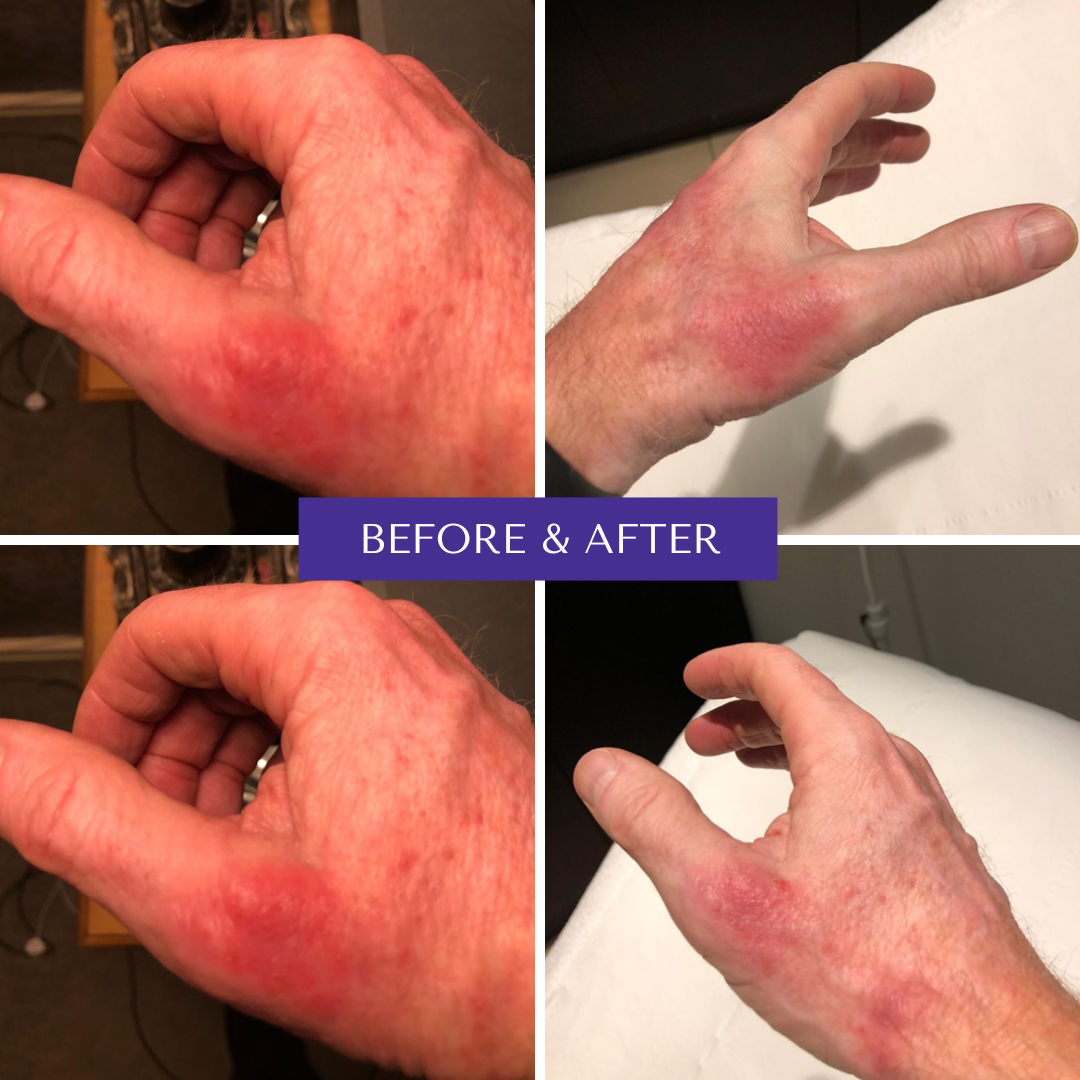
Managing psoriasis and skin conditions with EVRL light therapy
What is psoriasis?
The NHS describes psoriasis as a long-term common condition which causes itchy or painful areas of flaky or dry skin. And while currently there’s no cure, you can manage the symptoms effectively through various treatments.
Psoriasis patches often have the appearance of silvery-white scales, typically no more than 2cm in size, with either an oval or irregular shape.
Usually, you’ll find psoriasis on the head and behind your ears or on your chest, back and stomach, bottom, forearms and elbows, lower legs and knees. It’s a condition you can develop at any age, although it most commonly begins between 15 and 25 or in patients in their fifties. And it can vary from heavy flare-ups to being much milder.
Psoriasis occurs when your skin produces more skin cells than normal, and its causes are thought to be linked to the immune system. It tends to run in families, while triggers for the condition may include stress, alcohol or smoking, being overweight, some medicines, sunlight, pregnancy and certain infections.
The main recommended treatments include Vitamin D creams, gels and ointments plus moisturising products and steroids.
According to the UK’s Psoriasis Association, up to 3% of us in the UK are estimated to be living with the condition, or some 1.8m people.
How can EVRL light therapy help manage this condition?
Excimer Violet Red Light, EVRL laser therapy supplies concentrated light energy directly to the affected areas of skin and is an advanced, next-generation therapy. It uses low-level red and violet laser light to reduce pain and inflammation and promote healing at cellular level. EVRL works by helping to slow down excessive skin cell production, the root cause of psoriasis. At the same time, it leads to a noticeably less red-looking complexion, with less swelling and irritation generally, thanks to its calming of overactive immune responses in the skin. Indeed, the overall appearance of the skin should significantly improve.
This treatment also breaks down thick, scaly patches over time so that skin looks visibly smoother and clearer. Additionally, it reduces scaling, itching and inflammation.
Exposure to the surrounding, healthy skin is minimised since only areas affected by the skin condition are targeted. That means this treatment is especially useful if you have stubborn or treatment-resistant localised psoriasis patches, for example on the elbows, knees, scalp or hands, or if you want a very targeted procedure. This protects the skin which psoriasis has not impacted.
Equally, this therapy works well for areas that haven’t responded to ointments or creams alone, often, for example, on elbows, knees, hands, scalp and elbows. And EVRL suits a range of psoriasis severities, from moderate to severe.
With many patients witnessing steady improvement over a course of treatments, EVRI laser treatment speeds up skin recovery and encourages heathier skin regeneration, building results over consistent sessions. Results are frequently faster and more efficient than would be achievable with many of the alternatives.
What are the benefits of EVRL Treatment?
There are plenty of these, including:
- Comfort and convenience
Treatment sessions are short, typically lasting no longer than 30 minutes at a time. What’s more, the procedure is non-invasive, meaning any discomfort is minimal while the risk of any side effects is virtually zero.
Another upside is the lack of any necessary post-treatment downtime – you can get back to your normal daily life right away. In some cases, EVRL laser treatment may even require fewer sessions than some of the alternatives.
- Individually tailored treatment
The frequency and intensity of this therapy can be tailored to individual skin type and the severity of the psoriasis in question. In this way, you enjoy a more personalised programme of treatment than would be available via standard phototherapy or ultraviolet light therapy.
- Less need for medication
You may choose to have this treatment alongside other therapies as part of an overall treatment plan. Equally, in some cases, EVRL laser treatment may reduce reliance on topical treatments or stronger or systemic medications, such as those mentioned above.
How does EVRL differ from traditional phototherapy?
There are a number of ways in which EVRL laser treatment differs from standard, full-body phototherapy:
- It is less likely to cause widespread skin damage or discomfort compared to phototherapy.
- This newer treatment is ideal for localised, stubborn or otherwise hard-to-treat areas – the more traditional alternative is typically used for widespread plaque psoriasis (the most common form of the condition), covering 10% or more of the body.
- Targeted lasers often clear psoriasis plaques more quickly thanks to their higher-intensity, more effective doses with no risk.
- Widespread, lifelong phototherapy can carry some risk of long-term skin cancer.
- EVRL lasers target only the psoriatic plaques, while standard phototherapy exposes the whole body to UV light, even areas of skin which have not been affected by the condition.
EVRL laser treatment with Exmouth Body Aesthetics
At Exmouth Body Aesthetics, we have nearly three decades’ experience in body aesthetic treatments for the body and face. Read more about our advanced, non-invasive EVRL laser treatment. You’ll find us in Exmouth, just 12 miles from Exeter. Nurse-led and patient-focused, we’re here to help you achieve your goals for your body safely, effectively and professionally.
Browse our services, and get in touch if you still have any questions. Email lisa@exmouthaesthetics.com or call 07967 779913 and we’ll be pleased to help.